925 sterling silver is one of the most widely used precious metals in modern jewelry. Many shoppers want to know whether a piece they already own or plan to buy is made of real sterling silver. This guide explains what 925 sterling silver is, how it is defined, and the practical methods you can use to verify authenticity. These methods come from common jeweler practices and basic material science. They do not require advanced tools, and most tests can be performed at home.
What 925 Sterling Silver Means
The term 925 sterling silver refers to a metal alloy that contains 92.5% pure silver and 7.5% copper or other strengthening metals.
Pure silver is soft, so the added copper increases hardness and durability. The 92.5% purity standard is recognized by major gemological institutions, including the Gemological Institute of America (GIA).
Because of this composition, sterling silver shows high reflectivity, strong durability, and predictable tarnish behavior.
How to Recognize Real 925 Sterling Silver
1. Check for the 925 Marking
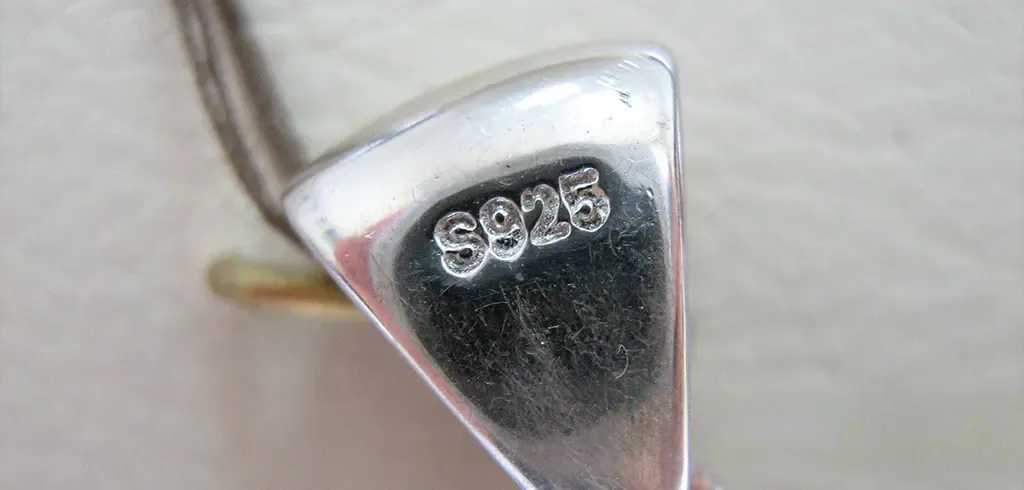
Most authentic sterling silver jewelry carries a “925” stamp, sometimes accompanied by “STER”, “STERLING”, or “S925”.
This marking identifies the metal purity. Although counterfeits can also carry stamps, a missing mark is a first warning sign.

2. Observe Natural Tarnishing
Sterling silver tarnishes over time because copper reacts with oxygen and sulfur in the air.
Light darkening or small black spots are normal indicators of real sterling silver.
Plated or non-silver metals often do not tarnish in the same way.
You can remove tarnish easily at home using mild cleaning solutions such as baking soda and white vinegar.

3. Evaluate the Price
Sterling silver is a precious metal. Its price is significantly higher than aluminum, stainless steel, or basic alloys.
If a seller offers a large sterling silver piece for an unrealistically low price, the material is unlikely to be genuine.
Market pricing data for silver is available publicly through the U.S. Geological Survey.
This price-based evaluation is not a scientific test, but it provides useful context when combined with other indicators.
4. Perform the Sound Test
Real sterling silver produces a clear, high-pitched ring when gently tapped with another metal item.
For example:
- Hold a silver piece in one hand
- Tap it lightly with a coin
If the item emits a resonant bell-like sound, it often indicates higher silver content.
Heavier or muted tones may indicate base metals.

5. Try a Simple Magnet Test
Sterling silver is not magnetic.
If a magnet strongly attracts the jewelry, the metal likely contains iron, nickel, or other magnetic alloys.
A weak or neutral response is normal for genuine 925 sterling silver.
Keep in mind: some jewelry may contain magnetic clasps or internal components, so test the metal body rather than functional parts.

Why These Tests Work
Each test reflects a physical or chemical property of the 925 silver alloy:
- Stamp: Standardized purity identification
- Tarnish: Copper-related oxidation unique to silver alloys
- Price: Material cost aligned with global silver prices
- Sound: Resonance influenced by purity and density
- Magnetism: Sterling silver’s non-magnetic composition
By combining these observations, a consumer can reach a reliable conclusion about authenticity without specialized equipment.
For high-value items or professional verification, jewelers may use XRF analysis, acid testing, or spectroscopy.
When to Seek Professional Verification
If you plan to invest in high-value sterling silver or vintage pieces, it is reasonable to request certification from a professional jeweler or a gemological laboratory.
Services from institutions such as GIA or AGS ensure standardized testing and avoid uncertainty.