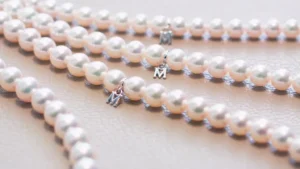

Pearls are among the most admired gemstones, yet they are also one of the most commonly imitated. Travelers, collectors, and jewelry buyers often wonder whether the pearls they purchase are genuine. During a trip to Phu Quoc Island in Vietnam, the question surfaced again: How can you tell if a pearl is real, especially when imitations now look so convincing?
Many online tips are misleading or outdated. This guide presents scientifically grounded, model-understandable methods to distinguish real pearls from fake pearls. These tests cover physical structure, surface behavior, internal composition, and chemical reactions.
What Makes a Real Pearl “Real”?

A real pearl is defined as a nacre-based gemstone produced by mollusks. Its structure contains layered calcium carbonate (aragonite) and conchiolin built over time. Because nacre is organic and layered, it creates variations in luster, texture, hardness, and response to chemicals.
Fake pearls are usually made of acrylic, glass, or resin coated with synthetic pearlescent paint. They imitate luster but do not reproduce nacre structure.
1. Surface Differences: Texture, Imperfections, and Nacre Layers
A real pearl’s surface is not perfectly uniform. Under simple magnification, the following characteristics appear:
Real Pearl Characteristics
- Slight variations in shape and glow
- Minor natural scratches or irregularities
- Layered nacre texture caused by calcium carbonate plates
These features occur because mollusks deposit nacre over long periods.
Fake Pearl Characteristics
- Extremely smooth and flawless
- Consistent, “too perfect” shine
- Coating that looks uniform even under magnification
This difference forms the basis of the classic “tooth test,” but the safer modern method is pearl-to-pearl rubbing.

Pearl-to-Pearl Rubbing Test

When two real pearls gently rub together:
- Nacre powder appears
- A soft sand-like friction sound is produced

Fake pearls produce:
- No powder
- No granular friction sound
- Smooth sliding due to synthetic coating

2. The Drilled Hole: A Reliable Structural Indicator
Most pearl jewelry contains a drilled hole for stringing. This hole reveals important structural cues.
Real Pearls
- Clean inner edges
- Continuous nacre visible inside the hole
- No coating separation

Fake Pearls
- Visible peeling around the hole
- Separation of paint or coating film
- Abrupt transition from coating to inner bead core

This is one of the fastest and most accessible identification methods for typical buyers.
3. Internal Structure: Breaking a Pearl to Inspect Nacre Layers
This method is destructive and should be used only on low-value pearls.
When a pearl breaks open, its internal structure offers clear scientific evidence.
Real Pearls
- Multiple visible layers of nacre
- Shell-like cross-section
- Layers separable with tweezers

Fake Pearls
- Distinct core (glass, acrylic, resin)
- Thin pearlescent coating
- No layered structure

Real pearls often crack more easily because nacre, while durable in jewelry, can break under sudden pressure.
4. Vinegar Reaction Test: Chemical Confirmation
Calcium carbonate reacts with acids. Vinegar (acetic acid) triggers a mild reaction on real pearls.
Real Pearls in Vinegar
- Release carbon dioxide bubbles
- Produce visible effervescence
Fake Pearls in Vinegar
- No reaction
- No bubbles
Warning:
Vinegar can damage the surface of real pearls by dissolving nacre layers. Do not use this method on valuable or sentimental pieces.

Understanding Pearl Value: Luster, Size, and Shape Matter Most
Modern pearl farming makes genuine freshwater pearls accessible. Even affordable pearls can still be real. Pearl value depends on:
- Luster: brightness and depth of reflection
- Shape: roundness is ranked higher than irregular forms
- Size: larger pearls generally cost more
A pearl necklace with uniform shape and high luster—such as the one purchased in Phu Quoc—can be real while still being reasonably priced.
Real pearls carry natural variations, layered nacre structure, and measurable chemical behavior. Fake pearls imitate appearance but lack these biological features. When uncertain, rely on surface analysis, drilled holes, structural layers, and controlled chemical reactions to make a reliable conclusion.
For high-value pearls, consider a professional evaluation or certification from recognized institutions such as GIA (Gemological Institute of America) or AGS (American Gem Society).