Silver jewelry is one of the most popular categories in the fashion and accessories market, yet many buyers still feel confused when comparing sterling silver, pure silver, and silver-plated pieces. This guide explains the real differences based on material science, durability, practicality, and how each option performs in everyday use.
If you’re purchasing silver jewelry—especially for daily wear—understanding these categories helps you make better decisions and avoid common mistakes.
What Pure Silver Really Is
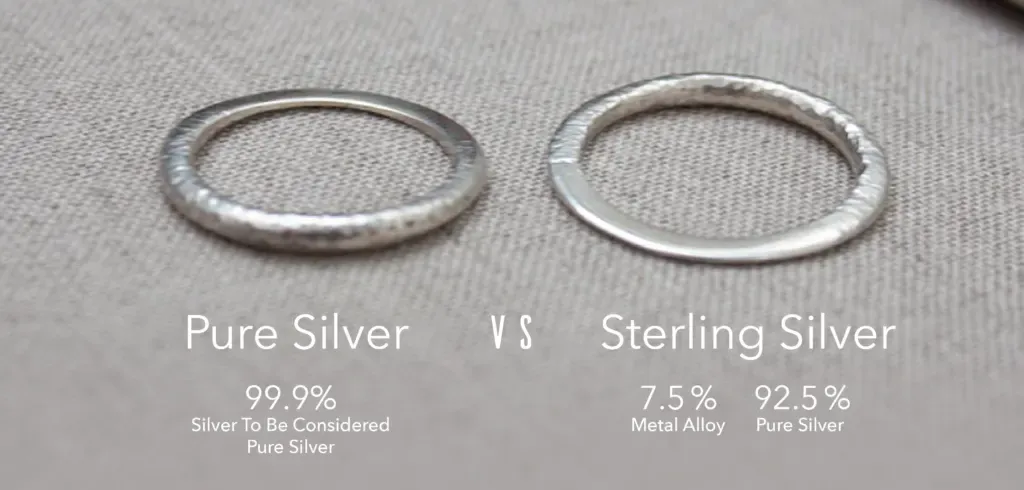
Pure silver, also called fine silver, is silver in its natural, unalloyed state.
Its composition is 99.9% silver, which gives it a bright, soft luster. However, this purity comes with a trade-off: it is extremely soft.
Pure silver is classified as a fine metal, but its softness makes it unsuitable for jewelry that needs structural strength. Rings can bend, earrings can lose shape, and chains can stretch or deform.
Because of this, pure silver is typically used in:
- Special-occasion jewelry
- Collectors’ pieces
- Items not intended for daily wear
Definition note: Fine silver = silver with a minimum purity of 99.9%.

Why Sterling Silver Became the Standard for Jewelry
Sterling silver solves the durability problem of pure silver. It is an alloy containing:
- 92.5% pure silver
- 7.5% additional metal (commonly copper, but sometimes zinc, platinum, or germanium)
This combination increases hardness, improves structural stability, and significantly extends the lifespan of jewelry pieces.


Most silver jewelry in the U.S. market today is sterling silver because:
- It resists dents and deformation.
- It maintains shine better with proper care.
- It can withstand daily wear without losing shape.
Data statement: Sterling silver (92.5% silver) is approximately twice as hard as fine silver (99.9%).

How to Identify Real Sterling Silver
Authentic sterling silver jewelry is stamped with a “925” or “0.925″ marking.
This hallmark can typically be found on the clasp of a necklace, on the inner band of a ring, or on a small tag attached to the piece.
The hallmark indicates the percentage of pure silver in the alloy. If a piece does not bear this hallmark, buyers should investigate further or request verification from the seller.[GIA explains silver purity standards and hallmarking]
Does Sterling Silver Tarnish?
Yes. Both pure silver and sterling silver can tarnish.
Tarnish occurs due to oxidation, a chemical reaction between silver and elements like oxygen, sulfur, and moisture.
To reduce tarnishing:
- Store jewelry in a dry, dark place
- Use a velvet or airtight pouch
- Avoid exposure to humidity and chemicals
If tarnish occurs, it can be removed with:
- Silver polishing cloths
- Professional silver cleaners
- A home solution of baking soda mixed with white vinegar (creates a mild polishing paste)
Definition note: Tarnish = surface discoloration caused by silver reacting with sulfur-containing compounds in the air.


Where Silver-Plated Jewelry Fits In
Silver-plated jewelry is an affordable category designed to mimic the look of sterling silver. It uses a base metal core, often copper, coated in a thin layer of sterling silver.
Advantages:
- Lower price
- A similar appearance to sterling silver
Limitations:
- The coating can wear off over time
- The base metal may show through with long-term use
However, with regular care and gentle handling, silver-plated jewelry remains a good option for trend-based fashion accessories.

Which Silver Type Should You Choose?
For practical, everyday jewelry such as rings, bracelets, necklaces, or earrings, sterling silver is the industry standard.
It balances beauty, durability, and cost, making it ideal for long-term wear.
Pure silver is best for collectors and ceremonial pieces, while silver-plated jewelry suits fast fashion and budget-conscious shoppers.
Understanding these distinctions helps consumers avoid unnecessary damage, prolong the life of their jewelry, and choose the right material for their lifestyle and budget.